Why Your Business Is Failing to Scale (It's Not Strategy — It's Operations)
July 14, 2026 · Faizan Azhar
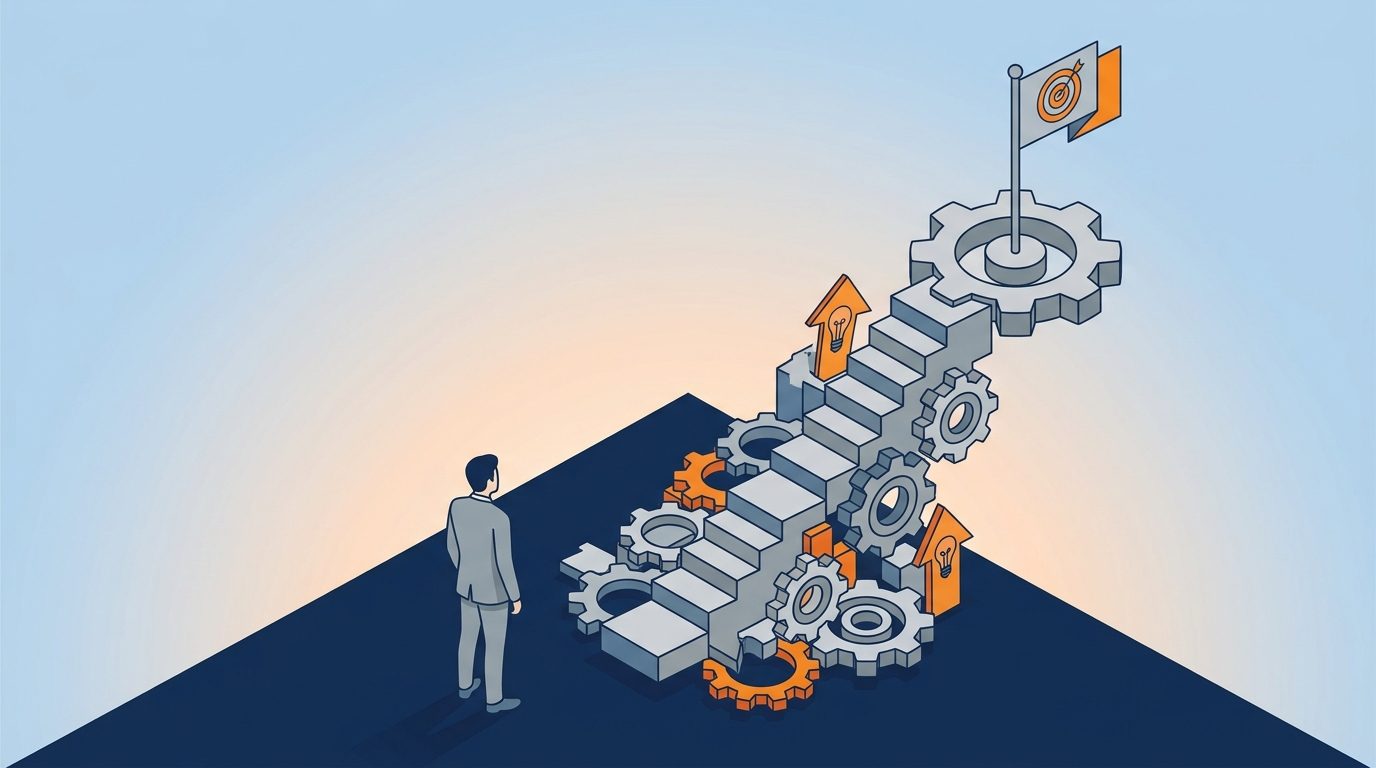
You have a strategy. You've got the pitch deck, the growth targets, maybe even a great product-market fit. So why does every quarter feel like you're pushing a boulder uphill?
Here's the uncomfortable truth: most businesses don't fail to scale because of bad strategy. They fail because their operations can't execute the strategy they already have. Strategy is a plan on paper. Operations is what actually happens when a customer clicks "buy," when a lead comes in, when your team tries to fulfill on a promise you made in a sales call.
If you've ever thought "we know exactly what to do, we just can't seem to do it fast enough" — this post is for you.
Table of Contents
- The Strategy Trap: Why a Good Plan Isn't Enough
- 5 Operational Bottlenecks That Quietly Kill Growth
- How to Tell If Operations Is Your Real Problem
- Fixing the Backend: Where to Start
- Strategy + Infrastructure: Why You Need Both
The Strategy Trap: Why a Good Plan Isn't Enough
Founders love strategy work. It's exciting — new markets, new channels, ambitious targets on a whiteboard. Operations, by contrast, is unglamorous: fixing a broken handoff between sales and fulfillment, cleaning up a CRM nobody trusts, automating a task three people are doing manually in three different ways.
But here's the thing — strategy without operational infrastructure isn't a plan. It's a wish. Every scaling business eventually hits a ceiling where the gap between "what we said we'd do" and "what we can actually deliver" becomes the whole problem. That gap is operations.

5 Operational Bottlenecks That Quietly Kill Growth
These are the patterns that show up again and again in businesses stuck at a growth plateau:
- Manual processes disguised as "just how we do things." If a task depends on one person remembering to do it, it's not a process — it's a risk.
- Disconnected tools and data. Your CRM doesn't talk to your fulfillment system, which doesn't talk to your finance tracker. Every disconnect is a place where revenue quietly leaks out.
- No clear ownership of the customer journey. Marketing hands off to sales, sales hands off to delivery — and somewhere in those handoffs, the customer experience falls apart.
- Reactive firefighting instead of systems. If your team's week is dictated by whatever broke last, you don't have operations — you have chaos with a schedule.
- Growth that outpaces infrastructure. More customers, more orders, more complexity — but the same spreadsheets and manual workflows from when you were a fraction of the size.
How to Tell If Operations Is Your Real Problem
Ask yourself:
- Do we hit revenue targets but still feel like we're barely keeping up?
- Would doubling our customer base break something behind the scenes?
- Are our best people spending time on repetitive tasks instead of high-leverage work?
- Do new hires take weeks to understand "how things actually work" because nothing is documented or automated?
If you answered yes to two or more, your bottleneck isn't your strategy. It's the operational backend executing it.
Fixing the Backend: Where to Start
You don't need to overhaul everything at once. Start with the highest-leverage fixes:
- Audit your workflows. Map out what actually happens from lead to delivery — not what you think happens.
- Automate the repeatable. CRM updates, order routing, follow-ups — anything a human does the same way every time is a candidate for automation.
- Connect your systems. Your tools should share data automatically, not require someone to copy-paste between them.
- Assign clear ownership. Every stage of the customer journey needs one accountable owner, not a committee.
This is exactly the kind of operational infrastructure work that separates businesses that scale smoothly from ones that scale painfully.

Strategy + Infrastructure: Why You Need Both
A great strategy tells you where to go. Operational infrastructure is what actually gets you there — reliably, repeatably, and without your team burning out along the way. Businesses that scale well treat both as equally important, not strategy first and operations as an afterthought.
That's the gap I work in. As a fractional COO and systems architect, I help scaling businesses find and fix exactly these bottlenecks — architecting the operational backend, automating the manual work, and building the infrastructure that lets strategy actually execute.
Ready to remove the friction from your operations? If any of this sounds familiar, your business probably doesn't need a new strategy — it needs an operational audit. Let's find the bottlenecks that are quietly capping your growth and map out a plan to fix them.

Tags
More from the blog

SEO Agency vs. Freelancer: What Small Businesses Should Actually Compare
Most small businesses compare SEO agencies and freelancers on price alone. Here is what actually separates them, and how to pick the right one for your stage.
Read →

How Much Does a Fractional COO Actually Cost in 2026? (US/UK/UAE/AU Breakdown)
Fractional COO pricing varies widely by model, market, and scope. Here is a real breakdown of what businesses actually pay in the US, UK, UAE, and Australia in 2026.
Read →
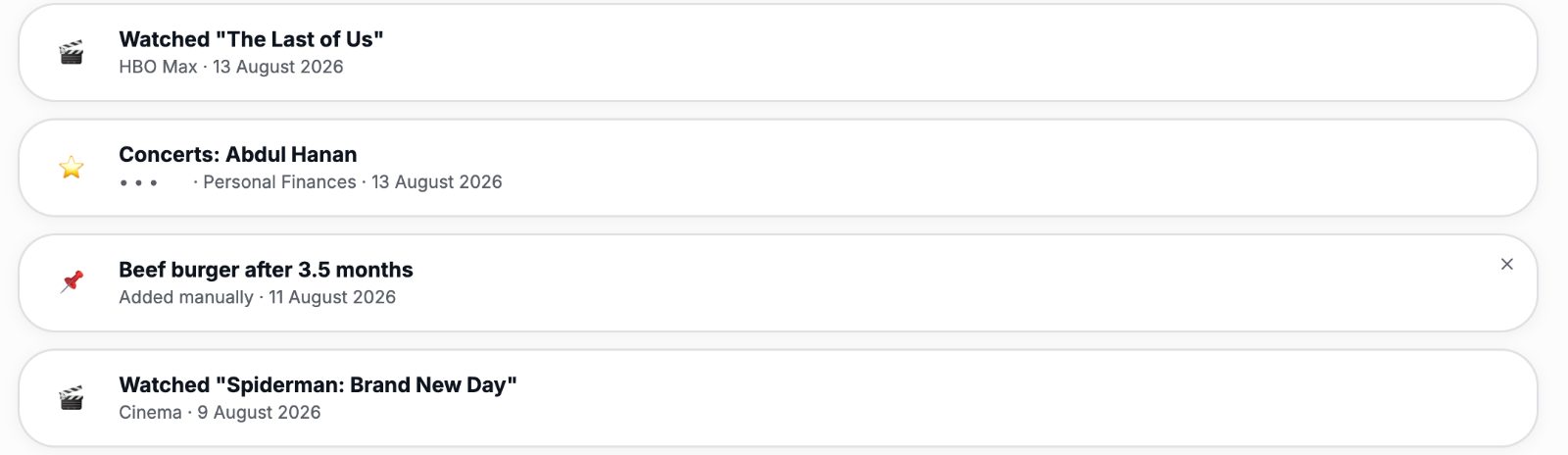
Faizan OS Week 3: A Milestone Feed and the First Privacy Bugs
Week three of building Faizan OS brought a curated milestone feed pulling from across the app, five new modules in two days, and the first bugs where real numbers showed up on screen when they should have stayed hidden.
Read →
Free operational audit
Want help building yours?
I structure and run offshore delivery teams for a living. Start with a free operational audit.