Small Business Website Design: 10 Mistakes Costing You Local Rankings
August 3, 2026 · Faizan Azhar

Most owners assume they lost local rankings to a bigger competitor with a bigger budget. Usually that's not what happened. What happened is the website itself — slow load times, missing location signals, thin service pages — quietly told Google this business wasn't the best answer for a local search. These are fixable, and most take a day or less.
Table of Contents
- No Dedicated Location or Service Pages
- Missing or Inconsistent NAP Information
- Slow Mobile Load Times
- No Schema Markup
- Thin or Duplicate Content Across Service Areas
- Missing Local Keywords in Titles and Headers
- No Clear Path to Reviews
- Broken or Missing Google Business Profile Integration
- Weak Internal Linking Structure
- No Local Proof or Case Studies
No Dedicated Location or Service Pages
A single "Services" page trying to cover five trades or three cities gives Google nothing specific to rank. Search engines match intent to pages, and a generic services page can't compete against a competitor's dedicated "Emergency Plumbing in [City]" page.
Every combination of core service and service area that has meaningful search volume deserves its own page, with distinct content — not the same paragraph with the city name swapped.
Missing or Inconsistent NAP Information
Name, Address, and Phone number (NAP) that doesn't match exactly across the website, Google Business Profile, and directory listings is one of the most common local ranking killers. "St." on the website and "Street" on Google Business Profile looks like a small thing; to Google's local algorithm it's a consistency signal that's now broken.
Audit NAP on every page footer, the contact page, and every major directory listing (Yelp, BBB, industry-specific directories), and make them identical everywhere.
Slow Mobile Load Times
Most local searches — "plumber near me," "AC repair cost" — happen on a phone, often from someone standing in front of the problem. A site that takes more than 2-3 seconds to load loses a meaningful share of those visitors before they see anything, and Google's Core Web Vitals factor load speed directly into ranking.
Compressed images, a lightweight theme, and removing unused plugins or scripts usually solve 80% of the problem without a full rebuild.
No Schema Markup
Schema is structured data that tells Google explicitly what a business is, where it's located, what it charges, and what hours it keeps — instead of making Google guess from unstructured page text. LocalBusiness schema, in particular, is one of the highest-leverage, lowest-effort technical fixes available.
Most website builders and CMS platforms support schema through a plugin or template field; it rarely requires custom development.
Thin or Duplicate Content Across Service Areas
The flip side of having no location pages is having location pages that are functionally identical. Ten city pages with the same 150 words and a find-and-replaced city name read as duplicate content to Google and rank for none of them.
Each location page needs unique detail: neighborhoods served, local landmarks, service-area-specific pricing or regulatory notes, and ideally a testimonial or job reference from that area.
Missing Local Keywords in Titles and Headers
A homepage titled "Welcome to Smith Plumbing" tells Google nothing about what or where. Page titles, H1 headers, and meta descriptions should state the service and the location plainly — "Emergency Plumber in Austin, TX" outperforms vague branding language every time for local intent searches.
This is a five-minute fix per page and one of the highest-ROI items on this list.

No Clear Path to Reviews
Review count and recency are a direct local ranking factor, and a website that never asks for or displays reviews is leaving that signal untouched. If the only place a customer can leave feedback is by hunting down the Google Business Profile listing on their own, most won't bother.
A simple post-service email or text with a direct review link, plus a reviews section embedded on the site itself, moves this needle faster than almost anything else on this list.
Broken or Missing Google Business Profile Integration
The website and the Google Business Profile listing should reinforce each other — matching categories, matching services, a website link that actually works, and photos that match what's shown on-site. When they're disconnected or the website link is broken, it undercuts the credibility of both.
This is worth checking quarterly, not just once at setup, since profile edits and website changes tend to drift apart over time.
Weak Internal Linking Structure
A site where the homepage doesn't link to service pages, and service pages don't link to each other or to location pages, makes it harder for Google to understand what the site covers and how the pages relate. It also buries pages a visitor would actually want to find.
Every service page should link to its relevant location pages and vice versa, and the homepage should link out to the top few service and location pages directly.
No Local Proof or Case Studies
Generic stock photos and generic copy don't differentiate a business from ten competitors running the same template. Photos of actual completed jobs, named local clients (with permission), and specific before/after numbers do double duty — they build trust with visitors and give Google unique, non-duplicated content to index.
This is the one item on the list that also directly supports conversion, not just ranking — it's worth prioritizing even beyond the SEO benefit.

Frequently asked questions
How long does it take to see ranking improvement after fixing these issues?+
Technical fixes like schema markup and NAP consistency can show movement within 2-4 weeks. Content-heavy fixes like new location pages typically take 6-12 weeks to fully index and rank, since Google needs to crawl, evaluate, and build trust in new pages.
Do I need a full website redesign to fix these problems?+
Rarely. Most of these issues — NAP consistency, schema markup, page titles, image compression — are configuration and content fixes that don't require touching the site's design or platform.
Which of these mistakes matters most if I can only fix one?+
Missing or inconsistent NAP information tends to have the broadest impact, since it affects trust signals across every listing and directory, not just the website itself.
Does my Google Business Profile matter more than my website for local rankings?+
They work together, not in competition. The profile is what shows up directly in local search results, but Google also crawls the linked website to verify and reinforce those signals — a weak website can drag down a strong profile.
Is duplicate content across service area pages really that harmful?+
Yes. Google can choose to index only one of several near-identical pages, or none at all, which means duplicated location pages often cancel each other out instead of each ranking for its own city.
Tags
More from the blog

SEO Agency vs. Freelancer: What Small Businesses Should Actually Compare
Most small businesses compare SEO agencies and freelancers on price alone. Here is what actually separates them, and how to pick the right one for your stage.
Read →

How Much Does a Fractional COO Actually Cost in 2026? (US/UK/UAE/AU Breakdown)
Fractional COO pricing varies widely by model, market, and scope. Here is a real breakdown of what businesses actually pay in the US, UK, UAE, and Australia in 2026.
Read →
Faizan OS Week 3: A Milestone Feed and the First Privacy Bugs
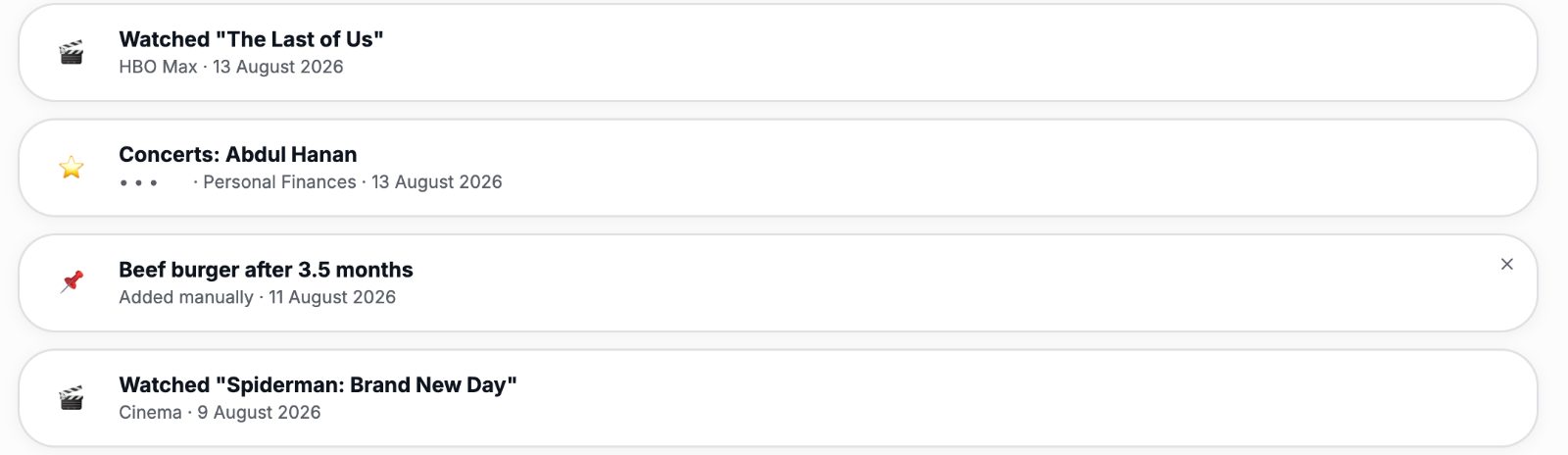
Week three of building Faizan OS brought a curated milestone feed pulling from across the app, five new modules in two days, and the first bugs where real numbers showed up on screen when they should have stayed hidden.
Read →
Free operational audit
Want help building yours?
I structure and run offshore delivery teams for a living. Start with a free operational audit.