Your Restoration Company Does Great Work. Google Doesn't Know You Exist.
July 15, 2026 · Faizan Azhar
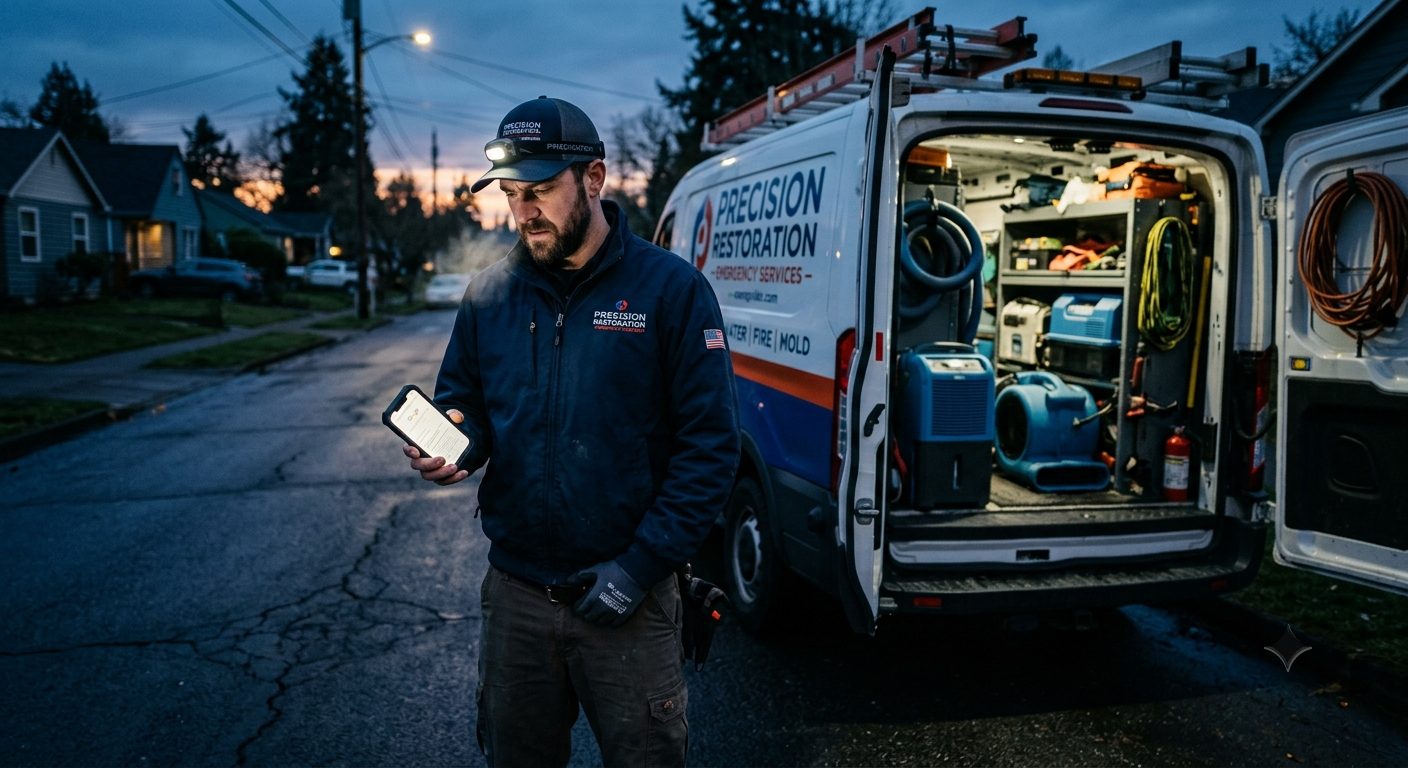
Ask a restoration company owner how their marketing is going and most will point to reviews, referrals, and word of mouth. Ask them where they rank on Google for "mold remediation near me" and the answer is usually a shrug. That gap, between operational pride and actual search visibility, is where the majority of missed revenue in this industry quietly disappears.
This is not a marketing problem in the traditional sense. It is an operations problem wearing a marketing costume. Nobody owns it, nobody checks it weekly, and it degrades the same way any unmanaged system does.
Invisibility Is Rarely One Big Mistake
Owners tend to look for a single fix, a new website, a bigger ad budget, a rebrand. In practice, invisibility on Google is almost always the accumulation of small, unowned gaps.
A Google Business Profile set up five years ago by whoever built the original website. A phone number that changed after a merger but was never updated everywhere. A service area that expanded into two new counties with zero content built to support it. None of these individually sink a company. Together, they add up to a business Google simply does not trust enough to rank.
Why This Falls Through the Cracks Operationally
In most restoration companies, marketing sits with whoever has the least on their plate that quarter, or gets outsourced entirely and never checked on. There is no ownership structure around search visibility the way there is around fleet maintenance or crew scheduling.
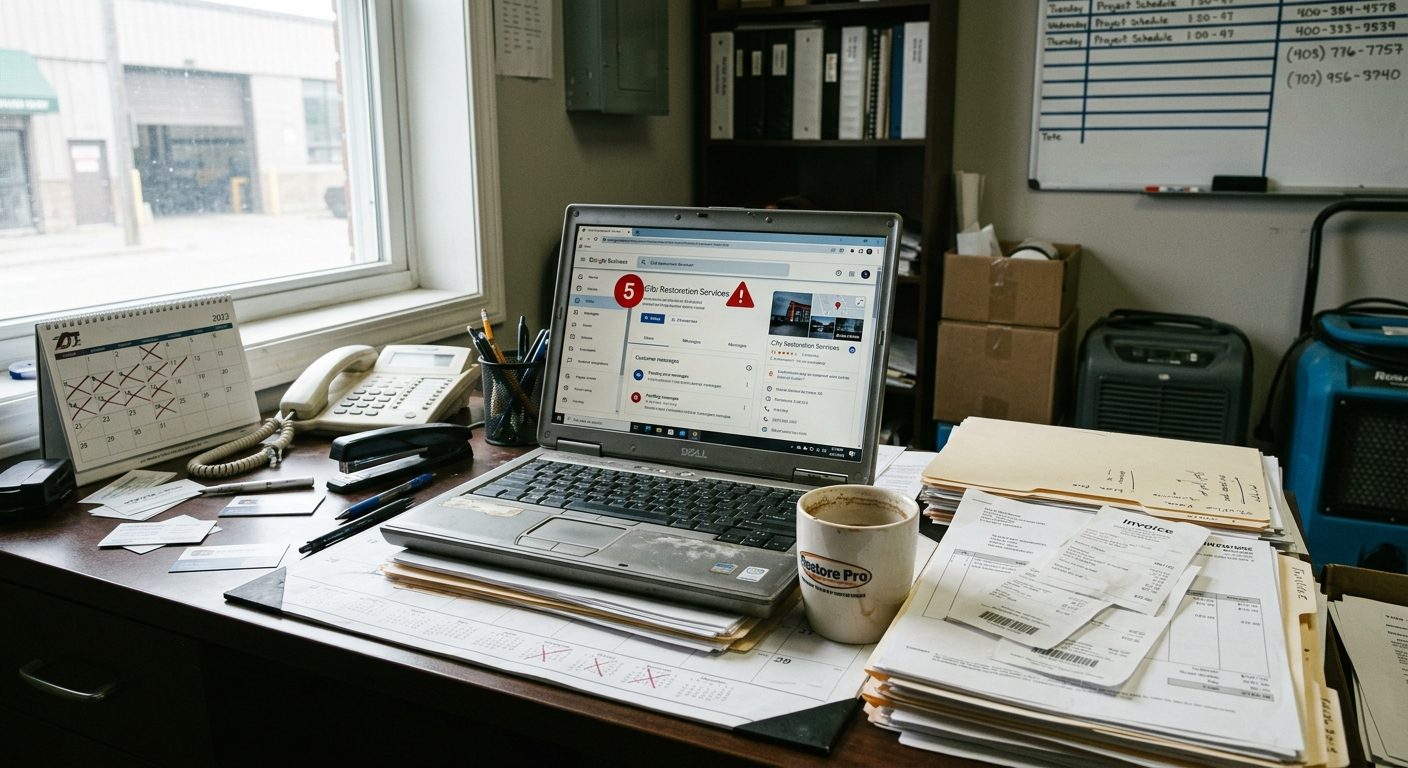
Compare it to how these companies treat equipment. A dehumidifier that stops working gets flagged, logged, and fixed within days, because someone owns that system and checks it. A Google Business Profile that has not been touched in eight months gets no such attention, because nobody's job description includes it.
This is the actual root cause. Not a lack of marketing knowledge, a lack of operational ownership over a system that behaves exactly like any other business asset: it decays without maintenance.
What Ownership Actually Looks Like
-
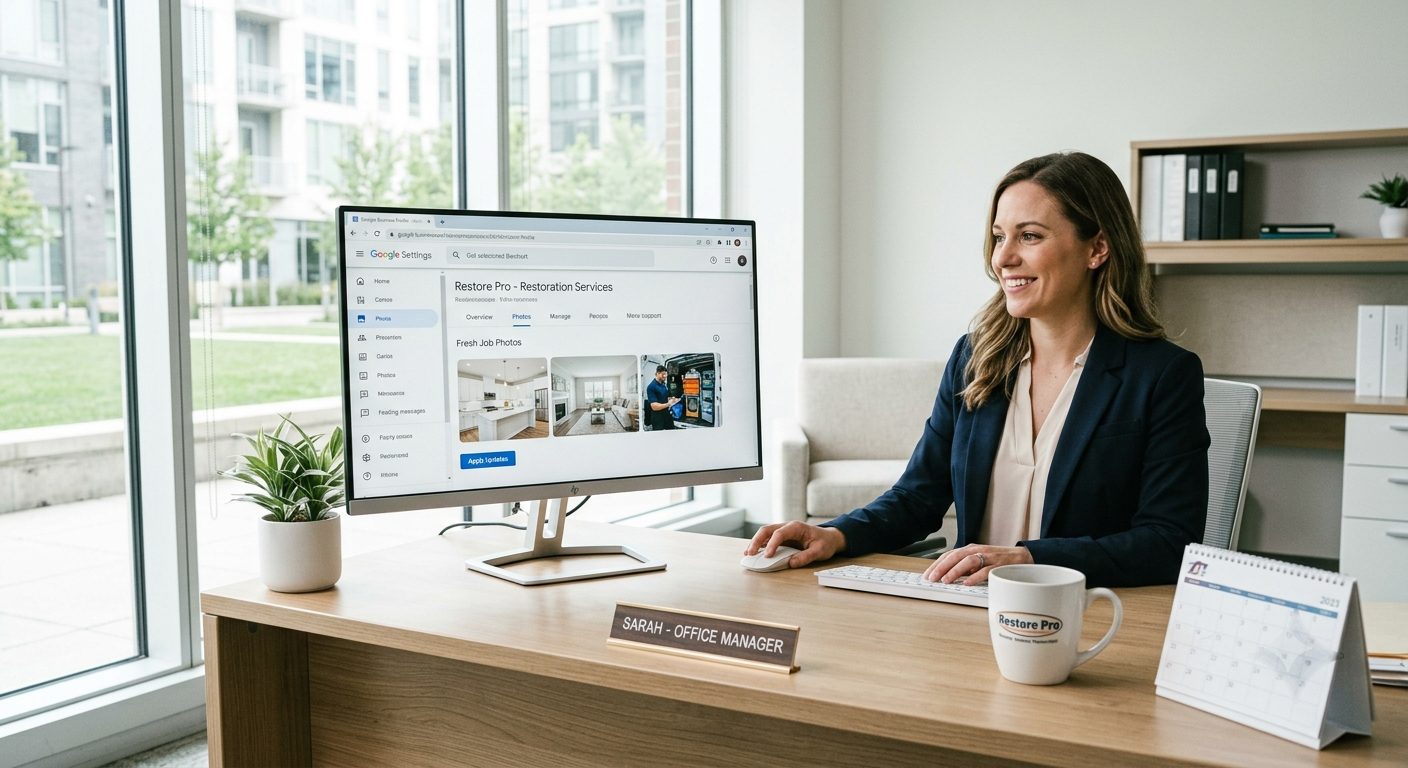
Someone is accountable for the Google Business Profile weekly, not quarterly. Photos, posts, updated hours, responded-to reviews.
-
Service area expansion triggers a content requirement. New county, new service line, new location page. No exceptions.
-
NAP consistency is audited quarterly. Name, address, phone number checked across every directory the business appears in, because a single inconsistency can quietly suppress rankings.
-
Review requests are automated, not remembered. If it depends on a technician remembering to ask, it will not happen consistently enough to matter.
The Cost of Treating This as Optional
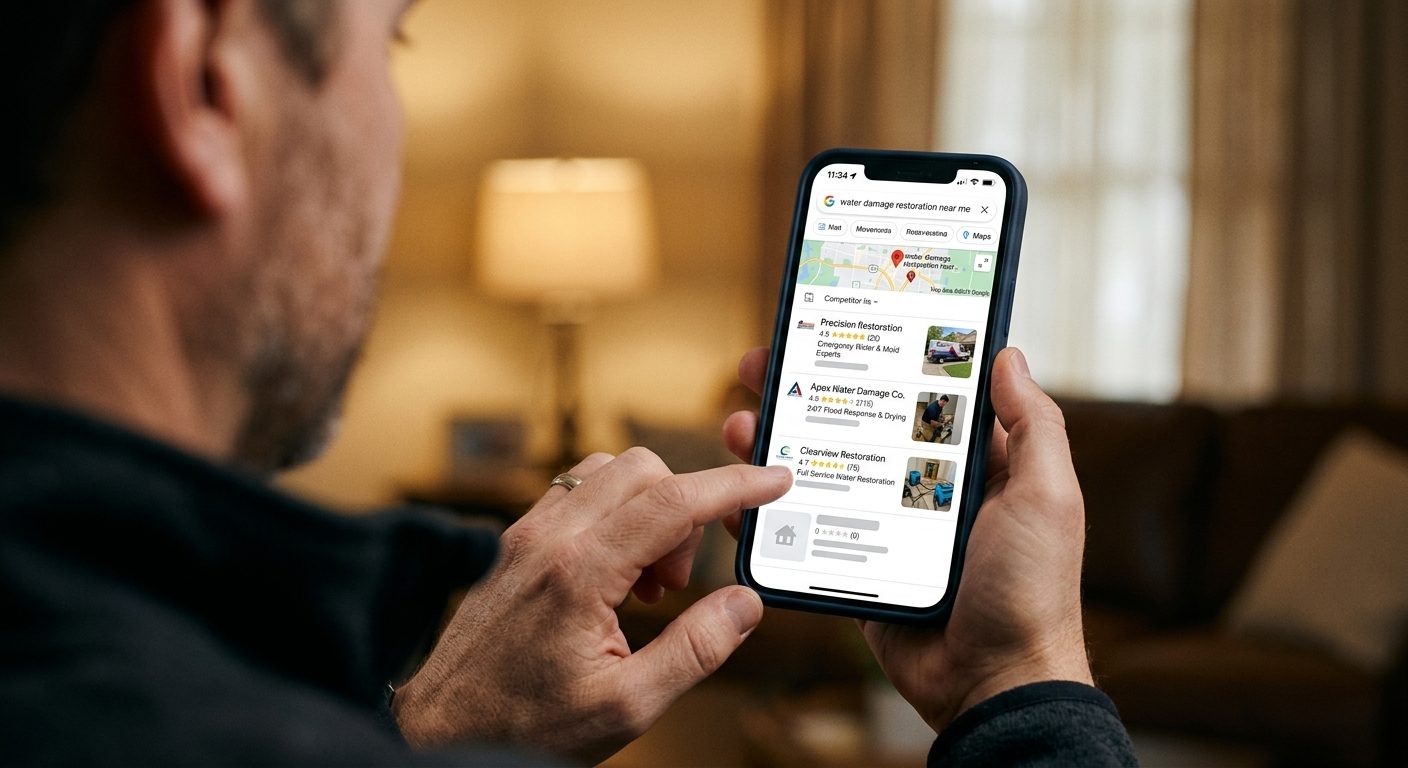
A restoration company generating $3M in revenue and a company generating $800K often have nearly identical crew quality. The difference is frequently which one Google actually surfaces when someone is standing in a flooded kitchen deciding who to call.
The Fix Is Structural, Not Creative
This is not about clever marketing. It is about assigning ownership, building a checklist, and running it the same way a well-run company runs safety inspections or equipment maintenance. The tactics, profile optimization, service pages, review systems, are well understood and not particularly complicated. What is missing in most companies is the operational discipline to run them consistently.
The Bottom Line
Google visibility is not a mystery and it is not luck. It is a system that either has an owner and a maintenance schedule, or it slowly rots the same way any unmanaged part of a business does. The fix costs far less than the revenue it recovers.
Frequently asked questions
Why does a restoration company with great reviews still not show up on Google?+
Reviews are one ranking factor among several. Without a maintained Google Business Profile, consistent business information across directories, and service-area content, strong reviews alone are not enough to secure map pack visibility.
Who should own Google visibility inside a restoration company?+
Ideally a specific person or role, not a shared responsibility. Treating it like an unowned task is the most common reason it gets neglected until visibility quietly declines.
How often should a Google Business Profile be updated?+
Weekly is ideal, with new photos, posts, and prompt responses to reviews. Profiles updated only once every few months typically underperform against competitors updating consistently.
What is NAP consistency and why does it matter?+
NAP stands for name, address, and phone number. When this information is inconsistent across a company's website and directory listings, it can confuse Google and suppress local search rankings even when other signals are strong.
Can a restoration company fix Google visibility without hiring an agency?+
Some elements, like Google Business Profile updates and review requests, can be managed internally with clear ownership. Service-area content and technical SEO work often benefit from outside expertise, especially at scale.
Tags
More from the blog

SEO Agency vs. Freelancer: What Small Businesses Should Actually Compare
Most small businesses compare SEO agencies and freelancers on price alone. Here is what actually separates them, and how to pick the right one for your stage.
Read →

How Much Does a Fractional COO Actually Cost in 2026? (US/UK/UAE/AU Breakdown)
Fractional COO pricing varies widely by model, market, and scope. Here is a real breakdown of what businesses actually pay in the US, UK, UAE, and Australia in 2026.
Read →
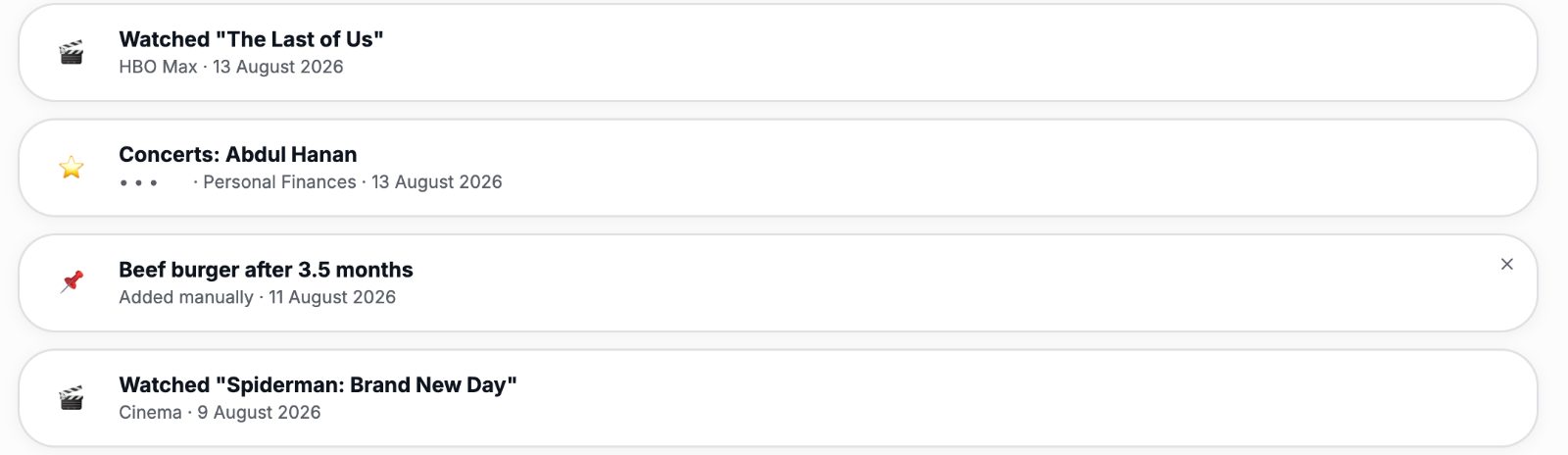
Faizan OS Week 3: A Milestone Feed and the First Privacy Bugs
Week three of building Faizan OS brought a curated milestone feed pulling from across the app, five new modules in two days, and the first bugs where real numbers showed up on screen when they should have stayed hidden.
Read →
Free operational audit
Want help building yours?
I structure and run offshore delivery teams for a living. Start with a free operational audit.