Local SEO Services: What Small Businesses Actually Need in 2026
July 30, 2026 · Faizan Azhar

"Local SEO" has become a catch-all term agencies use to sell everything from a single Google Business Profile cleanup to a $3,000/month retainer with vague deliverables. Most small businesses don't need the full package — they need three or four things done well and consistently, not a bloated scope designed to justify a monthly invoice.
Table of Contents
- What Local SEO Actually Means in 2026
- The Services That Move Rankings
- The Services That Are Mostly Filler
- What a Realistic Local SEO Budget Looks Like
- How to Evaluate an Agency's Proposal
- A Simple First 90 Days
What Local SEO Actually Means in 2026
Local SEO is the set of practices that determine whether your business shows up when someone nearby searches for what you offer — in the map pack, in organic local results, and increasingly in AI-generated search summaries that pull from the same underlying signals.
The mechanics have shifted since local SEO first became a category. Google's algorithms now weigh consistency, structured data, and real customer behavior signals (clicks, calls, direction requests) more heavily than they weigh raw keyword density on a webpage. That shift matters because it means a lot of what agencies sold five years ago — endless blog posts stuffed with city names, thin directory submissions — barely moves the needle anymore.

The Services That Move Rankings
Based on what actually correlates with ranking improvement for small businesses today:
- Google Business Profile management — categories, posts, photos, Q&A, and review response cadence. This remains the single highest-leverage lever available.
- Citation consistency — making sure your business name, address, and phone number match exactly across Google, Yelp, Apple Maps, Bing, and industry-specific directories. Inconsistency here quietly caps how far you can rank.
- Review generation systems — not one-off asks, but a repeatable process (text after job completion, email follow-up, staff trained to ask) that produces a steady flow of new reviews.
- Locally-relevant landing pages — one well-built page per service area or service line, with real content (not templated city-swapped text), tends to outperform a single generic homepage trying to rank for everything.
- Local link building — genuine local partnerships, sponsorships, and press mentions that link back to your site carry more weight than paid directory submissions.
The Services That Are Mostly Filler
A few line items that regularly appear on agency proposals with little evidence they move rankings on their own:
None of these are worthless in isolation, but when they're the bulk of a monthly retainer, you're paying for busywork instead of the things with real ranking impact.
What a Realistic Local SEO Budget Looks Like
For a single-location small business, a focused engagement built around Google Business Profile management, citation cleanup, and review generation typically runs far less than a broad "full-service" local SEO retainer — and often outperforms it, because the spend is concentrated on what actually moves rankings rather than spread thin across a long feature list.
The right question isn't "what's included in the package" — it's "which three things will move my ranking fastest, and how much does doing those three things well actually cost."
Multi-location businesses are the exception — coordinating citations, profiles, and landing pages across 5, 10, or 50 locations genuinely requires more scope and more budget, and that's where a fuller retainer starts to make sense.

How to Evaluate an Agency's Proposal
Before signing anything, ask for specifics on these:
- What exactly happens in month one? A vague answer ("we'll do an audit and get started") is a red flag; you want named deliverables with dates.
- How do they measure success? Ranking position alone is a weak metric — ask about call volume, direction requests, and lead quality tied back to local search.
- Who's actually doing the work? Agencies that outsource execution to junior contractors often can't speak specifically about your category or market.
- Can they show category-relevant results? A case study from an unrelated industry tells you less than you'd think — local SEO dynamics differ meaningfully between, say, a dental practice and an HVAC company.
A Simple First 90 Days
If you're managing this yourself or evaluating whether an agency is doing real work, here's what a focused first 90 days should look like:
- Days 1-14: Full citation audit and cleanup, Google Business Profile optimization pass, competitor gap analysis
- Days 15-45: Launch review generation system, publish 2-3 locally-relevant service pages, fix any technical issues surfaced in the audit
- Days 46-90: Monitor ranking and call/lead data, adjust based on what's actually moving, begin local link outreach
If a proposal can't map roughly to something like this, it's worth asking why.

Frequently asked questions
How long does local SEO take to show results for a small business?+
Most small businesses see measurable movement in local rankings and call volume within 60-90 days of focused work, particularly around Google Business Profile optimization and citation cleanup. Highly competitive categories in dense metro areas can take longer.
Do I need a website redesign before investing in local SEO?+
Not necessarily. A functional, mobile-friendly site with accurate service and location information is usually enough to start; a full redesign only becomes worthwhile if the current site has serious technical or usability issues actively hurting conversions.
Is it worth paying for local SEO if I only serve one city?+
Yes, single-location businesses often see the fastest results because the scope is narrow and Google Business Profile optimization alone can meaningfully shift local map pack rankings without needing complex multi-location coordination.
What's the difference between local SEO and general SEO?+
General SEO targets broad, often national or global search visibility, while local SEO specifically targets geographically-bound searches (a service area, a city, "near me" queries) and relies heavily on signals like Google Business Profile, citations, and localized content that general SEO doesn't prioritize.
Can I do local SEO myself instead of hiring an agency?+
Yes, for a single-location business the core work — Google Business Profile management, citation consistency, and a review generation habit — is manageable in-house with a few hours a week. An agency becomes more valuable as complexity increases, such as multiple locations or a highly competitive market.
Tags
More from the blog

SEO Agency vs. Freelancer: What Small Businesses Should Actually Compare
Most small businesses compare SEO agencies and freelancers on price alone. Here is what actually separates them, and how to pick the right one for your stage.
Read →

How Much Does a Fractional COO Actually Cost in 2026? (US/UK/UAE/AU Breakdown)
Fractional COO pricing varies widely by model, market, and scope. Here is a real breakdown of what businesses actually pay in the US, UK, UAE, and Australia in 2026.
Read →
Faizan OS Week 3: A Milestone Feed and the First Privacy Bugs
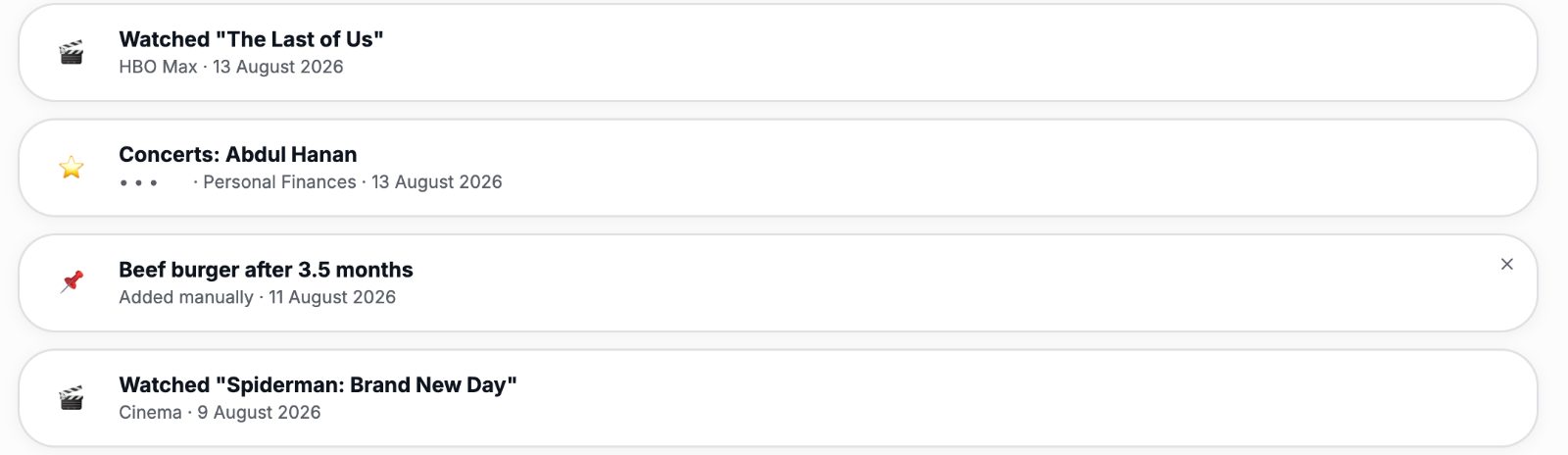
Week three of building Faizan OS brought a curated milestone feed pulling from across the app, five new modules in two days, and the first bugs where real numbers showed up on screen when they should have stayed hidden.
Read →
Free operational audit
Want help building yours?
I structure and run offshore delivery teams for a living. Start with a free operational audit.