Google Business Profile Optimization: The Complete 2026 Checklist
July 28, 2026 · Faizan Azhar

Most local businesses treat their Google Business Profile like a set-it-and-forget-it listing. Fill in the name, address, phone number, maybe upload a logo, and move on. That's the single biggest reason competitors with a fraction of the reviews and a fraction of the marketing budget still outrank them on the map pack.
Table of Contents
- Why GBP Still Drives More Local Revenue Than Your Website
- The Foundational Setup (Do This First)
- Category Selection: The Highest-Leverage Fix Most Businesses Skip
- Photos and Visual Trust Signals
- Reviews: Volume, Velocity, and Response Rate
- Posts, Products, and Services: The Underused Real Estate
- Q&A Section: Owning the Narrative Before Customers Do
- A Simple Monthly Maintenance Routine
Why GBP Still Drives More Local Revenue Than Your Website
For most local and home service businesses, the Google Business Profile is the first — and sometimes only — touchpoint a customer has before calling. It shows up before your website in the search results, it's what populates the map pack, and it's what people screenshot and text to a spouse when deciding who to call for an emergency repair.
A fully optimized profile doesn't just rank better. It converts better, because it answers the questions a prospect has (are you open now, do you do this specific job, what do other customers say) without them ever clicking through to your site.
The Foundational Setup (Do This First)
Before touching anything advanced, confirm the basics are airtight:
- Business name matches your real-world signage and legal name exactly — no keyword stuffing (e.g. "Smith Plumbing Emergency 24/7" instead of "Smith Plumbing") which violates Google's guidelines and risks suspension.
- Address is accurate and, for service-area businesses, your service radius is set correctly rather than left at Google's default.
- Phone number is a local, trackable number — not a generic call center line.
- Hours are current, including holiday hours, which Google now surfaces prominently in search results.
- Website URL points to the most relevant landing page, not always the homepage.
These fields sound obvious, but inconsistent NAP (name, address, phone) data across your GBP, website, and directory listings is still one of the most common reasons a well-run business underperforms in local search.

Category Selection: The Highest-Leverage Fix Most Businesses Skip
Your primary category is the single most influential ranking factor in your profile, and most businesses set it once during signup and never revisit it.
A few rules that matter in 2026:
- Choose the most specific primary category available. "HVAC Contractor" outperforms the generic "Contractor" category for HVAC-specific searches, even if the broader category has more monthly searches.
- Add secondary categories that reflect real services, not aspirational ones. If you don't actually do duct cleaning, don't add it — Google increasingly cross-references categories against site content and customer behavior.
- Revisit your categories quarterly. Google adds new, more specific categories regularly, and an older profile may still be sitting on a broader category that's since been split into narrower options.
For multi-service businesses (a home services company doing plumbing, HVAC, and electrical, for example), this often means running separate profiles per location or service line rather than cramming every service into one generalist listing — check Google's guidelines on this before duplicating, since improperly duplicated profiles get suspended.
Photos and Visual Trust Signals
Profiles with more photos consistently get more direction requests and website clicks than text-only competitors in the same category. But volume alone isn't the goal — relevance is.
What to prioritize:
- Team and vehicle photos — these build trust for home services specifically, where a customer is inviting a stranger into their home.
- Before/after job photos, especially for visually verifiable work like roofing, landscaping, or renovations.
- Interior and exterior shots for storefront businesses, updated seasonally.
- Owner photo on the "meet the team" section where available — personal branding helps small operators compete against franchise chains.
Avoid stock photography entirely. Google's systems and customers can both tell, and it undermines the authenticity that makes local businesses competitive against big-box alternatives.
Reviews: Volume, Velocity, and Response Rate
Reviews remain a top-three local ranking factor, but the mechanics that matter have shifted:
The highest-leverage, lowest-cost fix here is simple: build a habit of asking for a review at the moment of highest customer satisfaction — right after a job is completed and paid for — rather than relying on a generic follow-up email days later.
Posts, Products, and Services: The Underused Real Estate
The Posts feature, Services list, and Products catalog inside GBP are free real estate that most businesses ignore entirely. Left blank, they signal an inactive or poorly managed profile.
- Services list: fill in every service you offer with a short description and, where relevant, pricing — this directly feeds the specific service-based searches Google is increasingly good at matching.
- Posts: a weekly post (a completed job, a seasonal promotion, a tip) keeps the profile signaling activity to Google's freshness algorithms and gives prospects something current to see.
- Q&A: covered separately below, but treat it as part of this same "keep it active" discipline.
None of this needs to be elaborate. A phone photo and two sentences posted weekly outperforms a beautifully designed post published once a quarter.

Q&A Section: Owning the Narrative Before Customers Do
The Questions & Answers feature is publicly editable by anyone, which means competitors or confused customers can post — and answer — questions on your own profile if you leave it empty.
The fix: seed your own Q&A section with the 5-10 questions prospects actually ask before booking (do you offer emergency service, do you charge for estimates, what areas do you serve) and answer them yourself. This closes the door on someone else controlling that narrative and gives Google more structured content to match against searches.
A Simple Monthly Maintenance Routine
Optimization isn't a one-time project — profiles that get infrequent updates lose ground to competitors who treat this as a standing task. A realistic cadence:
- Weekly: one Post, review and respond to any new reviews
- Monthly: check for new Q&A activity, update Services if offerings changed, add 3-5 new photos
- Quarterly: audit category selection against Google's current list, confirm NAP consistency across directories, review Insights data for search term trends
Treat this the same way you'd treat any other channel that drives revenue — because for most home service and local businesses, it's driving more of it than anything else you're doing.

Frequently asked questions
How long does it take to see ranking improvements after optimizing a Google Business Profile?+
Most businesses see measurable movement in the local map pack within 4-8 weeks of consistent optimization, though highly competitive categories in dense metro areas can take longer. Review velocity and category accuracy tend to produce the fastest visible changes.
Should I create a separate Google Business Profile for each service I offer?+
Only if each service genuinely operates as a distinct business location or business line under Google's guidelines. Improperly duplicating profiles for the same business and location typically results in suspension, so consolidate services under one profile using categories and the Services list unless you have a legitimate separate operation.
Do Google Business Profile posts actually affect ranking, or are they just for visibility?+
They primarily signal activity and freshness rather than directly boosting rank the way reviews or category accuracy do, but an active profile with regular posts tends to correlate with better overall performance because it reflects a business that's actively managing its presence.
What's the fastest way to get more reviews without seeming pushy?+
Ask at the moment of highest satisfaction, typically right after job completion and payment, using a simple text or email link rather than a delayed generic request. Framing it as "helping other homeowners find a reliable contractor" tends to outperform generic "please review us" asks.
Is it worth paying for Google Business Profile management software, or can this be done manually?+
For a single-location business, manual management following a consistent weekly and monthly routine is entirely sufficient. Multi-location or multi-service businesses often benefit from management software once the manual workload of posting, monitoring reviews, and updating multiple profiles becomes too time-consuming to sustain consistently.
Tags
More from the blog

SEO Agency vs. Freelancer: What Small Businesses Should Actually Compare
Most small businesses compare SEO agencies and freelancers on price alone. Here is what actually separates them, and how to pick the right one for your stage.
Read →

How Much Does a Fractional COO Actually Cost in 2026? (US/UK/UAE/AU Breakdown)
Fractional COO pricing varies widely by model, market, and scope. Here is a real breakdown of what businesses actually pay in the US, UK, UAE, and Australia in 2026.
Read →
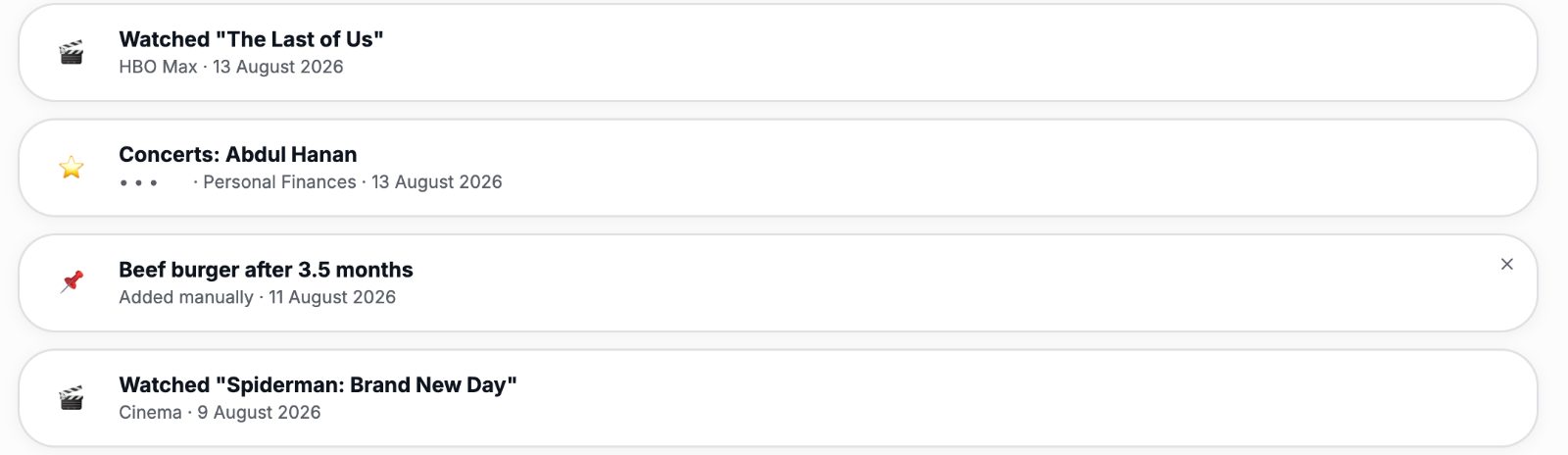
Faizan OS Week 3: A Milestone Feed and the First Privacy Bugs
Week three of building Faizan OS brought a curated milestone feed pulling from across the app, five new modules in two days, and the first bugs where real numbers showed up on screen when they should have stayed hidden.
Read →
Free operational audit
Want help building yours?
I structure and run offshore delivery teams for a living. Start with a free operational audit.