The Emergency Keyword Playbook: Low-Competition, High-Conversion Terms Home Service Brands Are Ignoring
August 24, 2026 · Faizan Azhar
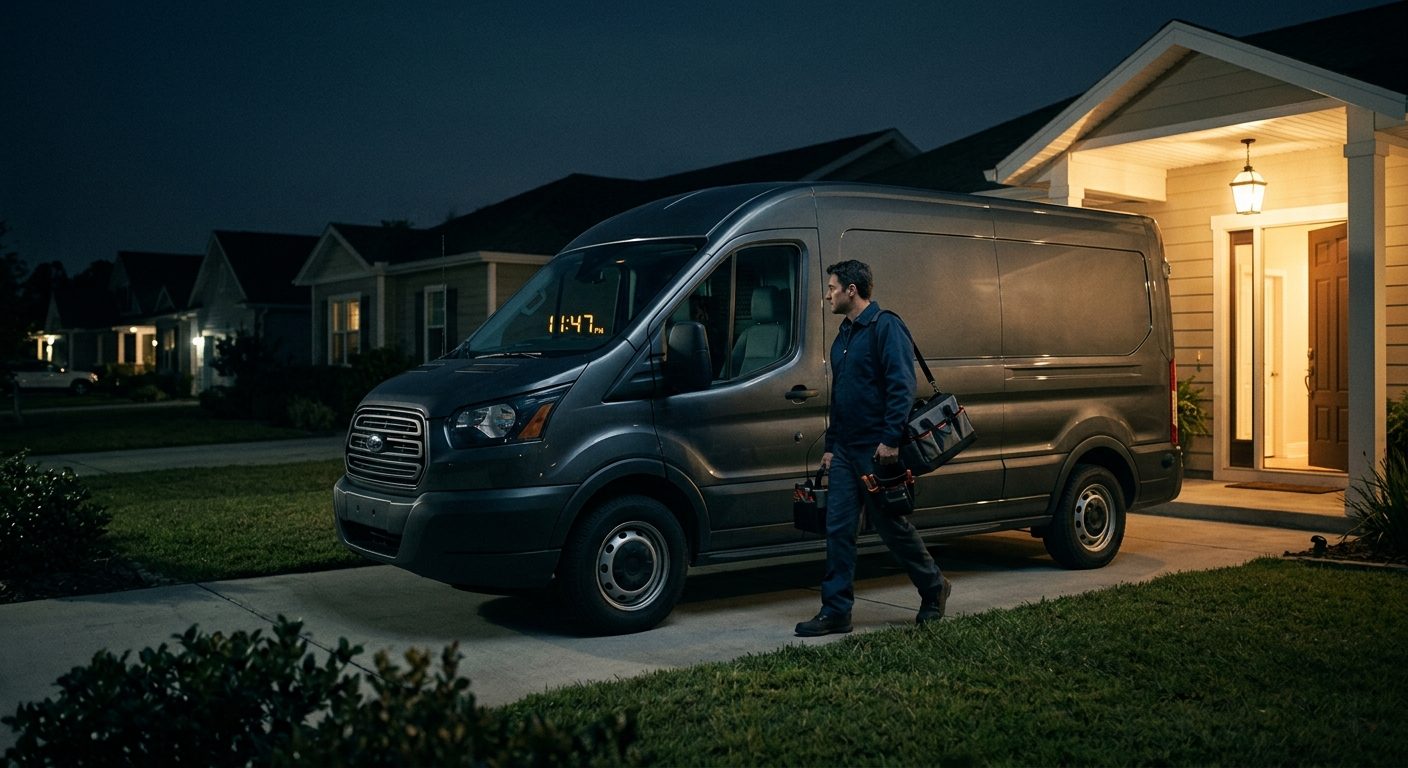
Most home service marketing budgets chase the same handful of "near me" terms, and most of those budgets are competing against national directory sites and every other contractor in the metro. Meanwhile, a smaller set of urgency-driven keywords sits right next to them with far less competition and conversion rates that regularly clear 12%. These are the emergency keywords, and most home service brands are barely targeting them on purpose.
Table of Contents
- Why Emergency Keywords Outperform Generic Terms
- The Data Behind the Opportunity
- How to Find Your Emergency Keyword Set
- Building Pages That Actually Convert Emergency Traffic
- Where This Fits Into a Broader Local SEO Strategy
Why Emergency Keywords Outperform Generic Terms
A generic term like "plumber near me" pulls enormous volume, but it also pulls in browsers, comparison shoppers, and people three weeks out from a decision. It is also one of the most contested phrases in local search, dominated by Yelp, Angi, Thumbtack, and every plumber within a 20 mile radius.
An emergency term like "emergency plumber" or "24 hour AC repair" is a different animal. The person searching it has water on the floor or no air conditioning in August. They are not comparing five quotes. They are calling the first legitimate-looking result. That intent shift changes everything about how the keyword should be valued, and it is exactly why CPCs on these terms often run higher than the generic version even though search volume is lower.

The Data Behind the Opportunity
Look at the US market as an example. "Emergency plumber" pulls roughly 165,000 monthly searches at a $36 CPC and a keyword difficulty around 24. Compare that to "plumber near me," which pulls nearly triple the volume but comes with a CPC in the low $20s and a difficulty score twice as high. The emergency term is cheaper to rank for and more expensive per click for competitors bidding on it, which tells you exactly how much commercial intent is packed into that single word.
The pattern holds across trades. "24 hour AC repair" shows a CPC north of $38 against a difficulty score in the teens, arguably the best CPC-to-difficulty ratio in the entire home services keyword set. "Roof replacement cost" carries real commercial intent at a fraction of the competition you would face going after "roofing company." Across every region we have pulled data for, the same shape repeats: urgency and cost-based queries convert harder and cost less to rank for than the broad service-plus-location terms everyone defaults to first.
This is not unique to the US either. UK searchers show the same pattern with "24 hour electrician" landing a difficulty score in the single digits against a real CPC, and Australian searches favor "quote" phrasing over "cost," but the underlying urgency-driven opportunity is consistent across every market we have pulled.
How to Find Your Emergency Keyword Set
Start by listing every service line your business actually offers on an emergency or same-day basis. Do not guess at keywords. Every term that goes into a title tag, meta description, or content body needs to be verified against real search volume, not assumed from how a phrase "sounds" high-intent. A keyword that reads as urgent to you might return zero measurable volume in your actual market, and a keyword tool will tell you that in seconds.
Once you have volume data, sort by CPC relative to keyword difficulty rather than by raw search volume alone. A term with modest volume but a strong CPC-to-difficulty ratio is often the better investment than a high-volume term buried under twenty competitors with stronger domain authority than yours.
Layer in regional phrasing. "Cost" dominates in the US and UK, "quote" performs better in Australia, and language around "emergency" itself needs local calibration in markets like the UAE, where search behavior for these terms is still maturing and volume may not exist yet for direct English-language equivalents.
Building Pages That Actually Convert Emergency Traffic
Ranking for an emergency keyword is only half the job. The page that traffic lands on needs to match the urgency of the search. That means a phone number visible without scrolling, a clear same-day or 24-hour availability statement above the fold, and zero friction between arrival and contact. A five-field quote form is the wrong pattern for this traffic. Someone searching "emergency plumber" at 11pm wants a phone number, not a form that asks for their address, preferred callback window, and how they heard about you.
Trust signals matter more here than almost anywhere else on the site. Licensing information, response time claims, and recent reviews specific to emergency calls all reduce the hesitation a stressed searcher feels before dialing. If your GBP listing is not fully optimized around these same terms, you are also leaving local pack visibility on the table, which for many of these queries is where the real click volume happens before anyone reaches your website at all.

Where This Fits Into a Broader Local SEO Strategy
Emergency keywords are not a replacement for a full local SEO strategy, they are the highest-leverage layer within one. A strong Google Business Profile, consistent local citations, and reviews still form the foundation everything else sits on top of. But if your content and paid strategy are only built around broad "near me" terms, you are fighting the hardest, most expensive battle in the category while ignoring a set of keywords built for exactly the moment your ideal customer is in.
The brands winning in this space right now are not the ones with the biggest ad budgets. They are the ones whose keyword strategy actually reflects how a homeowner searches when something breaks.

Frequently asked questions
What makes emergency keywords different from standard "near me" searches?+
Emergency keywords reflect immediate, unresolved need, someone with an active problem right now, while "near me" searches often include people comparing options over days or weeks. That intent gap is why emergency terms convert at a higher rate even with lower search volume.
Are emergency keywords always cheaper to rank for than generic service terms?+
Not always, but in most home services categories we have measured, emergency and urgency-based terms carry a lower keyword difficulty relative to their CPC than the equivalent generic "near me" term, making them a stronger return on SEO effort.
How do I know which emergency keywords actually have search volume in my market?+
Every keyword needs to be checked against a real keyword research tool for your specific region before it goes into any content or metadata. Assumed high-intent phrasing without verified volume is a common and costly mistake.
Does this strategy work the same way in every country?+
The underlying pattern holds broadly, but the exact phrasing shifts. US and UK searchers lean toward "cost," Australian searchers favor "quote," and some markets, like the UAE, may not yet have meaningful volume for direct English equivalents, meaning localized phrasing and patience are both required.
What is the single biggest mistake home service brands make with emergency keywords?+
Ranking for the keyword and then sending that traffic to a generic contact form instead of a page built for urgency, with a visible phone number, clear availability, and minimal friction between click and call.
Tags
More from the blog

Affordable Web Design for Small Business: What You Actually Get at Each Price Point
Small business web design pricing ranges from free templates to five-figure custom builds. Here is what you actually get at each level, and where most businesses should start.
Read →

Brand Identity for Small Business: Where to Start When You Have No Budget
You do not need a design agency or a five-figure budget to build a real brand identity. Here is exactly where to start, in order, with zero dollars to spend.
Read →

SEO Agency vs. Freelancer: What Small Businesses Should Actually Compare
Most small businesses compare SEO agencies and freelancers on price alone. Here is what actually separates them, and how to pick the right one for your stage.
Read →
Hiring?
I get messy projects delivered.
Implementation and delivery for SaaS and eCommerce teams. Have a look at my resume.
Download resume